

View Our Range
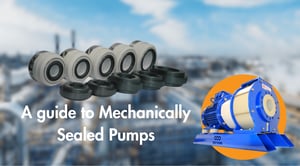
A complete guide to mechanically sealed pumps
Introduction
Mechanically sealed pumps are widely used across chemical, industrial and process applications dues to their reliability, safety and ability to handle demanding operating conditions. .png?width=280&height=232&name=Untitled%20design%20(1).png) However, selecting the correct mechanical seal arrangement and ensuring it operates reliably over its service life requires an understanding of how seals work, the different types available and the factors that influence performance and longevity. This guide provides a comprehensive overview of mechanically sealed pumps, covering mechanical seal fundamentals, seal selection, common seal types, installation best practices and the key considerations required to maximise seal life. Whether you are specifying new equipment or maintaining an existing pump system, this guide aims to offer practical insight to support informed decision-making and reliable pump operations.
However, selecting the correct mechanical seal arrangement and ensuring it operates reliably over its service life requires an understanding of how seals work, the different types available and the factors that influence performance and longevity. This guide provides a comprehensive overview of mechanically sealed pumps, covering mechanical seal fundamentals, seal selection, common seal types, installation best practices and the key considerations required to maximise seal life. Whether you are specifying new equipment or maintaining an existing pump system, this guide aims to offer practical insight to support informed decision-making and reliable pump operations.
What is a mechanical seal?
A mechanical seal is a key component in a pump that prevents process fluid from leaking along the rotating shaft. It achieves this by using two precisely machined sealing faces—one rotating with the shaft and one stationary—pressed together by spring force and system pressure. 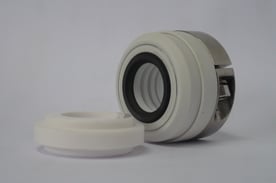 A thin fluid film between the faces provides lubrication and reduces wear during operation. Compared to traditional packing, mechanical seals offer improved reliability, reduced leakage, and lower maintenance requirements, making them the preferred sealing solution for most modern pump applications.
Mechanical seal selection
We at Crest offer many types of pumps with a variety of arrangements. These include magnetic drive, seal-less and mechanical seals. Dependent upon the operating conditions factors such as liquid, temperature, solids content fluid density (S.G.). As well as the pump installation itself often means that a mechanically sealed pump is the obvious choice. There are several types of mechanical seal and whilst Crest can fit specific seal if required, it is fair to say that 99% of seals fit under three separate categories.
Single Internal Mechanical Seals (MSH Type)
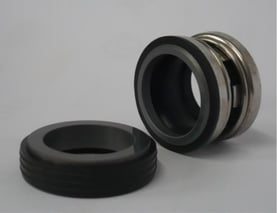 The single most common seal type and consists of a single large 316 stainless steel spring. This surrounds a rubber bellows and fits with a silicon carbide stationary seat and rotating face. We fit Silicon carbide as a standard material, but other material combinations such as carbon and ceramic are available. The rubber bellows is available in either EPDM or Viton though, again, other materials are available. The seal mounts internally so the 316 stainless steel spring and other metal components are to the pumped liquid exposed, as this can be a limiting factor it is important to ensure to select the correct materials. Please refer to Crest if in any doubt.
Double Mechanical Seals Requires Pressurised External Flush (Double MSH/MSH Type)
For liquids that contain solids, especially abrasive, or have a tendency to crystalize a double mechanical seal is essential. This arrangement consists of two MSH seals fitted back-to-back within a seal chamber. This will have a separate pressurised flush at a pressure of one bar above the maximum discharge pressure of the pump. The inboard seal (the seal nearest the pump) will see the pumped liquid but only the rubber bellows, face, and seat; the spring and metal components are left to the flush liquid exposed. Using the outboard seal to seal the chamber. The pressure is always higher within the seal chamber. Thus, ensuring that only clean liquid is at the critical area across the face. Also meaning that solids and / or crystals cannot damage the face or seat. The pressurised flush found from either an external source or by thermosyphon sealing system such as the Crest SS24 sealing system. A specific advantage of using double seals is that the pump protected against dry running.
Single External Mechanical Seals (MSC Type)
A PTFE mechanical seal with a machined bellows mainly used for handling clean acids and scrubber liquors. The only materials in contact with the pumped medium is PTFE and silicon carbide. (rotating face and stationary seat). Furthermore, this seal is perfect for handling highly corrosive acids etc. Controlled pressure of the face against the seat is affected by a single external spring surrounding the PTFE bellows. MSC seals are simple to set up and maintain.
How to ensure a long life for your mechanical seal
Mechanical seals continue to be the number one cause of chemical pump downtime.
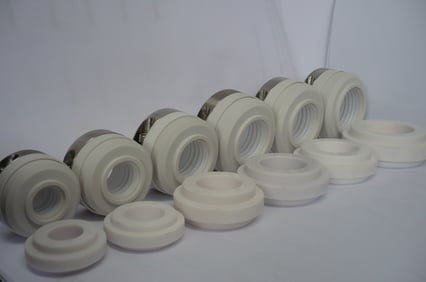 This is normally because the seal face has either worn out or the seal has suffered damage. If it’s the former, replacing the mechanical seal is normally the logical course of action. But if it is the latter, it’s likely the rest of the system will need investigating to diagnose the true cause of the problem.
On a damaged shaft seal, it is normally possible to observe the cause of the damage, by the application of the pump. Then record this information in a damage report, including the details of the operating conditions.
Vibration
Pump systems are prone to vibrations, from any different source. Operation of a pump away from its BEP (Best Efficiency Point) on the pump curve can cause cavitation. Which can be the source of vibration transmitted through the impeller to the mechanical seal. When using variable frequency drives, allow the pump to operate near its critical speeds can be fatal for the pump as high speeds can produce large scale vibration.
Regardless of the source, vibration in a pump system is the misalignment of the coupling or suction. Some of the most common failure modes are:
- Breakdown of the lubricating film stiffness between the seal faces that result in face wear and chipping.
- Fatigue failure of the welds in a metal bellows seal.
- Wear of the drive mechanism. This includes the pins, lug and mating slots, grooves and holes resulting in the loss of axial tracking and damage to the seal rings.
- Loosening of the drive collar set screws, causing a loss of the torque transmission on the rotating components.
Lubrication failure
The seal face lubrication is a critical requirement for a mechanical seal to function within a pump system. Wet contacting mechanical seals rely on the existence of a fluid film between the seal faces. This minimises wear and friction and provides a reliable performance.
If a pump operates away from its BEP, then this can cause loss of fluid to the fluid film, leading to face-to-face contact that results in high friction, increase temperature and accelerated wear. The seal will degrade and then fatally fail.
A way to maintain your pump, to ensure that it will not dry run is to install a Dry Run Monitor. This stops any chance of your centrifugal pump from causing unnecessary downtime. The Dry run monitor is provided with an alarm setting which alerts the user to know there is an issue with the pipework. And there isn’t sufficient fluid within the system by monitoring the percentage the level of amps.
Alternatively, you use a dual seal system. Two sets of seal faces are installed as an enclosed unit, containing its own circulating fluid, with the lubrication inside the dual seal. This means that the contaminated fluid cannot leak into the seal, leaving it only cool, clean and compatible for lubricating the seal faces.
The best way to ensure a long service life for your seal, is to lubricate them with cool, clean and stable fluids. However, their dynamic nature makes them the first thing to fail if something else in the system fails. Vibration, dry-running, pump misuse and miss-installation can all cause the seal to fail.
Therefore, it is paramount to have routine maintenance to ensure the pump is fully operational and at the BEP. And only then can you ensure a full working life with your chemical pump.
Other mechanical seal issues to watch out for:
- Dry running, even for a short period, can quickly damage seal faces.
- Improper installation, including incorrect setting or handling, often leads to early failure.
- Incorrect seal selection for the fluid, pressure, or temperature can cause excessive wear.
- Shaft misalignment can scratch seal faces and compromise sealing performance.
- Contamination or abrasive particles can scratch seal faces and compromise sealing performance.
- Thermal shock from rapid temperature changes may cause cracking or distortion of seal components.
Mechanical seal installation best practices
Correct installation is critical to achieving reliable mechanical seal performance. Even a well-selected seal can fail prematurely if installed incorrectly.
Cleanliness is essential. The shaft, seal chamber and surrounding components should be clean, smooth and free from burrs or damage before installation. Seal faces should only be handled with clean hands and never touched on the sealing surfaces.
Other key best practices include:
- Verifying shaft runout, sleeve condition and seal chamber dimensions
- Ensuring proper alignment between the pump and driver
- Following manufacturer setting dimensions and torque requirements
- Avoiding the use of lubricants or sealants unless specified by the seal supplier
Advantages of using a mech sealed pump
Using a mechanically sealed pump offers several important advantages, especially in industrial and process applications: .jpg?width=371&height=247&name=PP%20(7).jpg)
- Reduced leakage: Mechanical seals are designed to minimize fluid leakage, which helps improve safety, protect the environment, and reduce product loss—particularly important when handling hazardous or valuable fluids.
- Lower maintenance requirements: Unlike traditional packing, mechanical seals do not require regular adjustment or frequent replacement, leading to less downtime and lower maintenance costs over the life of the pump.
- Improved reliability and efficiency: By maintaining a consistent seal under varying pressures and temperatures, mechanical seals support stable pump operation and help maintain overall system efficiency.
- Cleaner operation: Minimal leakage means less contamination around the pump, resulting in a cleaner work environment and reduced risk of corrosion or damage to nearby equipment.
- Longer equipment life: Reduced shaft wear and better sealing performance help extend the service life of both the pump and its components.
- Better suitability for demanding applications: Mechanical seals perform well in high-pressure, high-temperature, and high-speed applications where traditional sealing methods may struggle.
Frequently asked questions
How long should a mechanical seal last?
With correct selection, installation and operation a mechanical seal can last several years. Seal life depends heavily on operating conditions and maintenance practices.
Can a mechanical seal run dry?
No. mechanical seals rely on a thin fluid film for lubrication and cooling. Dry running can cause rapid seal face damage.
What is the difference between single and double mechanical seals?
Single seals use one set of seal faces and are suitable for clean fluids, while double seals provide an additional layer of protection and are used in more demanding or hazardous applications.