

View Our Range
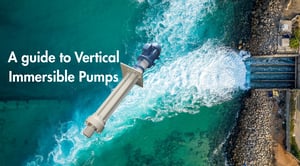
A complete guide to vertical immersible pumps
Contents
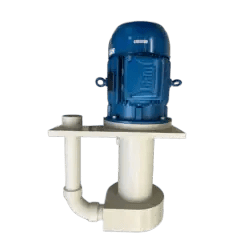
What is a vertical immersible pump?
What's the difference between immersible & submersible?
How deep can a vertical immersible pump operate?
What liquids can vertical immersible pumps handle?
How are vertical immersible pumps installed?
What are some common maintenance issues?
Vertical immersible pumps are widely used in industrial and commercial applications where liquids must be transferred from pits, sumps, tanks or reservoirs. This guide explains how vertical immersible pumps work, where they are used, the liquids they can handle along with what maintenance considerations are most important for long-term reliability.
What is a vertical immersible pump?
An immersible pump has the motor mounted above the tank with an extended shaft to the pump end at the bottom of the sump. 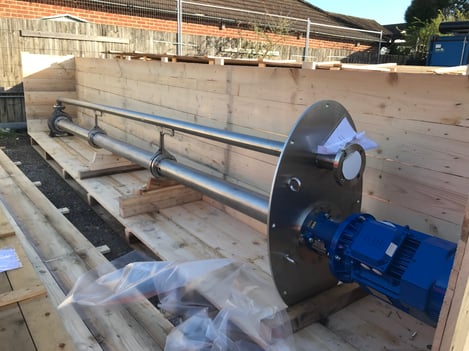 The pump can be mounted internally, or externally & shorter lengths are built without immersed bearings or seals meaning they have virtually no maintenance requirements or risk of failure.
What’s the difference between immersible & submersible?
Submersible pumps are complete units, including the motor and the whole pump can be totally submerged whereas immersible pumps are mounted in a vertical position with the motor above the liquid and the pump end extended below the liquid level.
Submersible pumps are widely used for water & sewage handling applications, their compact dimensions and ease of use with integral float switches make them ideal for these situations. However, as the have standard carbon and ceramic mechanical seals and the materials of construction (generally cast iron or lower grade stainless steel) are limited, submersible pumps are unsuitable for use on liquids other than water, they are not designed for use with chemical or aggressive liquids.
On the other hand, immersible pumps can be designed and manufactured specifically for use in corrosive and aggressive situations and are made in a range of materials from 316 stainless steel up to engineered plastics such a polypropylene & PVDF. As the motor is above the pump it can be supplied in a specification to suit the environment including ATEZ zones 1 & 2. Column lengths can be supplied and even with shorter lengths (provided that the impeller is flooded at start up) the pump can still pump down to 6 meters.
How deep can a vertical immersible pump operate?
The operating depth of a vertical immersible pump depends on its shaft length, bearing arrangement and construction materials.
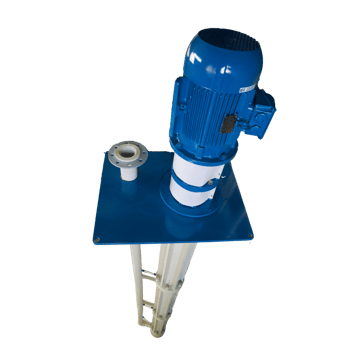 Crest's vertical immersible pump range offer flexible immersion depths to suit a wide variety of tank and sump sizes. Standard column lengths start as short as 300mm for compact applications and can be built up to 6 meters to reach deeper fluids. Some sub-ranges, such as the cantilever models are designed for shorter assemblies (300mm – 1.5m), whilst heavy duty plastics/stainless variants like the PPS range are available up to 4.5m deep. Please bear in mind all designs can also be tailored to the exact immersion depth required for your installation.
What liquids can vertical immersible pumps handle?
Vertical immersible pumps are highly versatile and can handle a wide range of liquids, depending on the materials of construction and hydraulic design.
Most commonly handled liquids include:
- Clean or slightly contaminated water
- Corrosive chemicals (acids, alkalis, solvents)
- Industrial wastewater
- Coolants and process fluids
- Oils and light hydrocarbons
- Plating solutions and chemical baths
Some models can handle limited solids or slurries (with appropriate design) although they are not typically intended for heavy solids like sewage solids or abrasive slurries.
Material selection is crucial. Pumps may be manufactured from cast iron, stainless steel, duplex steel, polypropylene, PVDF or other corrosion-resistant materials to ensure fluid compatibility.
If you are unsure we have a handy chemical compatibility table which helps take the guesswork out of material selection.
How are vertical immersible pumps installed?
Vertical immersible pumps are usually installed in a fixed vertical position over a sump, pit or tank. .jpg?width=276&height=368&name=cantilever%20Kemira%20(2).jpg)
Some common installation methods include:
Mounting on a cover plate / base plate at the top of a tank or pit
- Floor mounted installation with the pump extending downward into the liquid
- Guide rail systems for deeper or removable installations
Proper alignment is essential to minimize vibration and shaft wear. The pump must be securely supported to handle axial and radial loads during operation.
Electrical connections, discharge piping and safety guards should be installed so that the motor remains protected from splashing or corrosive vapours. Ventilation around the motor is also important to prevent overheating.
What are some common maintenance issues?
Whilst vertical immersible pumps are generally reliable, regular inspection and maintenance are essential to maximise service life.
Common maintenance issues can include:
- Bearing wear, especially in product-lubricated bearings. Cause: continuous operation in abrasive or corrosive liquids & inadequate lubrication. How to fix it: Inspect bearings regularly for noise & heat. Maintain correct liquid levels and replace worn bearings promptly to prevent shaft damage.
- Shaft misalignment or deflection. Cause: improper installation or excessive operating depth. How to fix it: Ensure the pump is correctly supported & verify proper alignment during installation.
- Corrosion or erosion of pump components. Cause: due to incompatible materials. How to fix it: Select materials compatible with the pumped fluid, apply protective coatings where appropriate & replace damaged components before performance is affected.
- Vibration which may indicate cavitation. Cause: worn bearings, or operation away from the best efficiency point. How to fix it: Inspect and replace worn bearings, confirm the pump is correctly sized for the application and tighten mounting hardware plus improve structural support.
- Cavitation. Cause: Insufficient liquid above the impeller, air entrainment and excessive flow demand. How to fix it: Maintain minimum required submergence, install anti-vortex plates if necessary (a flat plate installed above the pump inlet and just below the liquid surface. Its purpose is to disrupt swirling flow patterns that can lead to vortex formation). You can also reduce the flow rate or resize the pump.
- Build up of solids or scale. Cause: settling solids in the sump, crystallisation or scaling from process fluids and infrequent cleaning. How to fix it: Use materials or coating resistant to scaling, consider an impeller design better suited for limited solids and implement routine cleaning and flushing schedules.
- Motor overheating. Cause: Poor ventilation around the motor & overloading due to incorrect pump selection. How to fix it: Ensure adequate airflow around the motor, verify the pump is operating within its range and upgrade motor size if operating conditions have changed.
Most issues can be avoided through regular inspections, monitoring vibration, noise and temperature, maintaining correct liquid levels and correct material selection from the outset.
Because the motor remains above the liquid, vertical immersible pumps allow faster inspection and safer maintenance to fully submersible designs.
Quick fire FAQ’S
-1.jpg?width=478&height=318&name=vertical%20pumps%20(2)-1.jpg)
Do vertical immersible pumps self-prime?
No, they rely on flooded suction and must have liquid covering the impeller before starting.
Are vertical immersible pumps seal-less?
Many designs are seal-less or use vapour seals (limits the escape of vapours or liquid mist, not to seal pressurised liquid). This reduces leakage and maintenance compared to mech sealed pumps.
Do they need a foot valve?
No, because the pump is already submerged, foot valves are not required.
Are vertical immersible pumps energy efficient?
Yes, when correctly sized and operated near their best efficiency point (BEP).
Do they require special foundations?
Not usually, but they must be securely mounted to prevent vibration and shaft misalignment.
Can vertical immersible pumps be custom built?
Yes, shaft length, materials, bearings and discharge configurations are often tailored to the application.
Are they noisy?
Vertical immersible pumps are generally quiet, but increased noise may indicate cavitation, bearing wear or vibration issues.
Whether you’re emptying tanks, transferring chemicals or recirculating aggressive fluids, Crests vertical immersible pumps are engineered to fit your exact needs. They’re available in column lengths ranging from 300mm up to 6 meters, with options which require virtually no maintenance- thanks to designs without immersed bearings or seals.
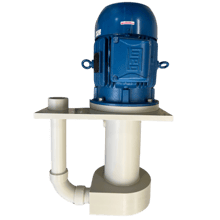 Our Surge, CSS & Cantilever pump ranges feature cantilever, seal-less designs which allow run-dry capability – meaning they can operate safely without fluid for indefinite periods of time. Made from corrosion-resistant materials, these pumps handle everything from clean liquids to solids-laden acidic or alkaline fluids.
Every sump is unique in size and contents, so we build each vertical pump to your precise specifications. Whether you need specific performance parameters, solids handling capability, or customized sizing, our team is ready to help design the perfect solution for you.