

View Our Range
A complete guide to Slurry Pumps
Slurry pumps can seem complicated at first, especially if you’re dealing with abrasive solids, blockages, or short pump life. Below we’ve answered the most common questions we’re asked by customers based on real applications, plus we’ve included insight into the PEMO slurry pumps we supply here at Crest.
Contents
What types of slurries can a slurry pump handle?
When should I use a slurry pump instead of a positive displacement pump?
Can slurry pumps handle solids continuously?
What is the maximum particle size a slurry pump can handle?
When should I use rubber lined vs. metal lined?
What coatings or liners extend slurry pump life?
How does slurry density affect power consumption?
How do I prevent clogging or blockages?
What causes excessive wear in slurry pumps?
Which slurry pump parts wear the fastest?
Common issues and how to fix them
Can slurry pump handle froth or foam?
Introducing PEMOs slurry pump range
What is a slurry pump?
A slurry pump is designed to move liquid which contains solid particles. These solids may be sand, grit, sludge, minerals or industrial waste.
Unlike standard water pumps, slurry pumps are built to take a lot more punishment. They have thicker casings, stronger shafts, and wear-resistant internals so they can cope with abrasion and higher loads over long periods.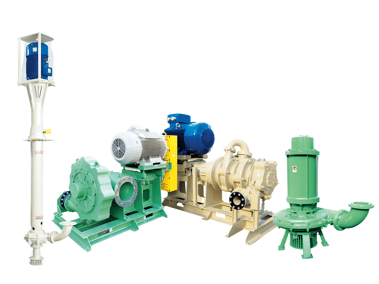
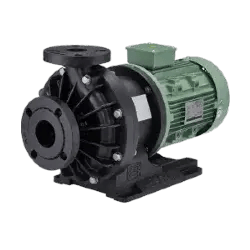
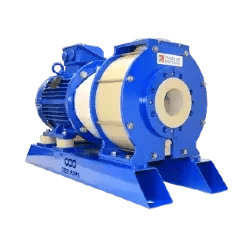
The PEMO slurry pumps we supply are designed specifically for these tougher duties and are available in horizontal, vertical, and submersible configurations, depending on how and where the pump needs to operate.
What types of slurries can a slurry pump handle?
Slurry pumps can handle a wide range of mixtures, but the key factors are:
- Solid size
- Solid concentration
- How abrasive the solids are
- Whether the slurry is corrosive
In real-world terms, this could mean anything from light wastewater sludge to dense, abrasive mineral slurries.
PEMO slurry pumps are commonly used for abrasive industrial waste, sand & grit, sludge & thickened liquids, chemical & process slurries. Matching the pump to the slurry is critical — this is where correct material selection and sizing really matter.
When should I use a slurry pump instead of a positive displacement pump?
You should generally choose a slurry pump when you need to move larger volumes, the slurry contains abrasive solids or continuous operation is required. 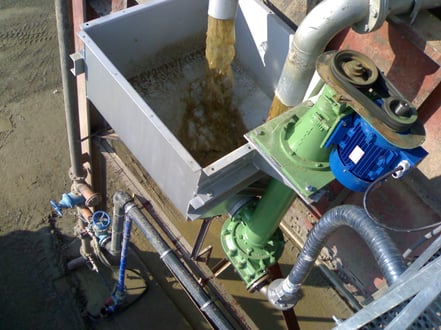
Positive displacement pumps are better suited to very viscous, low-flow, or metered applications. Slurry pumps, on the other hand, are ideal for moving solids-laden fluids efficiently and continuously.
If the goal is reliable transfer rather than precise dosing, a slurry pump is usually the better choice.
Can slurry pumps handle solids continuously?
Yes — that’s exactly what they’re designed for.
A properly selected slurry pump will run continuously with solids present, as long as:
- The pump is correctly sized
- The slurry stays in suspension
- The materials are suitable for the duty
What is the maximum particle size a slurry pump can handle?
There’s no single answer, because it depends on the pump size and design.
As a general guide:
Smaller submersible slurry pumps often handle solids up to around 20mm, whereas larger industrial slurry pumps can handle much larger particles.
The most important rule we follow is this:.jpg?width=396&height=496&name=1%20(5).jpg)
Always size the pump for the largest particles you expect to see — not the average. This helps avoid blockages, damage, and unexpected downtime.
When should I use rubber-lined vs. metal lined?
This comes down to the type of wear you’re dealing with.
Rubber-lined pumps work best when solids are smaller and rounded, the slurry is mildly abrasive or some corrosion resistance is needed.
Metal-lined pumps (such as high-chrome or Hardalloy) are better when solids are large, sharp or highly abrasive, impact wear is a concern or higher temperatures are involved.
PEMO slurry pumps can be supplied with rubber linings or Hardalloy metal components, allowing us to tailor the pump to the application rather than forcing a one-size-fits-all solution.
What coatings or liners extend slurry pump life?
Wear is unavoidable with slurry pumps — but the right materials can dramatically extend service life.
Common options include:
- Rubber liners for abrasion and corrosion resistance
- High-chrome / Hardalloy liners for severe wear
- Ceramic coatings in specialist applications
In practice, the biggest gains come from selecting the right liner and impeller material from the start, rather than trying to fix wear problems later.
How does slurry density affect power consumption?
Heavier slurries require more energy to move — it’s as simple as that.
.jpg?width=418&height=314&name=1%20(10).jpg) As slurry density increases power demand increases, load on the motor increases and wear rates often increase.
As slurry density increases power demand increases, load on the motor increases and wear rates often increase.
We always recommend allowing a sensible margin, so the pump isn’t constantly operating at its limit.
How do I prevent clogging or blockages?
Most blockages come down to system design, not the pump itself.
Key things to watch:
- Keep pipe velocities high enough to stop solids settling
- Avoid sharp bends or sudden reductions in pipe size
- Use the correct impeller design for the solids involved
- Ensure good suction conditions
In some applications, agitation or flushing systems are used to keep solids moving and prevent settling around the pump inlet.
What causes excessive wear in slurry pumps?
The most common causes we see are:
- Highly abrasive solids
.jpg?width=394&height=296&name=1%20(7).jpg)
- Excessive flow velocity
- Incorrect material selection
- Cavitation caused by poor suction conditions
Wear can’t be eliminated completely, but it can be managed and predicted with the right pump selection and maintenance plan.
Which slurry pump parts wear the fastest?
Typically, the parts that wear first are the impeller, the volute or casing liner and the throat bush/suction liner. These components are designed as wear parts and are usually replaceable, which helps reduce long-term running costs.
Common issues and how to fix them
- Low flow or pressure is often caused by worn internals or incorrect sizing.
- Excessive vibration or noise is usually linked to cavitation, misalignment, or blockages.
- Seal leakage can happen often due to abrasive wear or incorrect sealing arrangement.
- Frequent blockages is usually a sign that solids are settling, or particle size has been underestimated.
- Regular inspection and early intervention make a huge difference to reliability.
Can slurry pumps handle froth or foam?
They can — but with some limitations.
Air and foam reduce pumping efficiency and can lead to loss of prime or cavitation. Where froth is present, system design becomes especially important.
PEMO slurry pumps are capable of handling some aeration, but heavy froth applications may require additional measures such as deaeration or modified intake arrangements.
Introducing Our PEMO Slurry Pump Range
At Crest Pumps, we’re proud to supply the PEMO slurry pump range — a family of heavy‑duty pumps that are built to handle the toughest slurries and solids‑laden fluids without compromise. These are not off‑the‑shelf general‑purpose pumps: they’re engineered to thrive in abrasive, viscous, and demanding environments where poor performance simply isn’t an option. 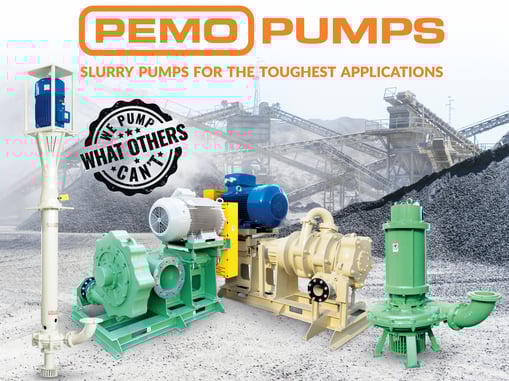
Whether you’re handling thick sludge, grit‑laden waste, or abrasive process fluids, PEMO slurry pumps are designed to keep your plant running with minimal downtime and maximum uptime. Capacities span from small jobs right through to 2,000 m³/hr, covering most industrial requirements.
Here’s a quick look at the different PEMO ranges.
Vertical Slurry Pumps
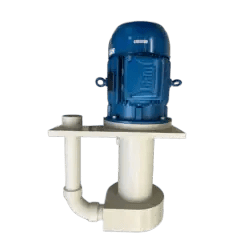
Specifically designed to be installed in sumps or pits, these pumps are strong, dependable, and configured so the shaft and bearings remain solidly supported above the slurry level. They’re great for continuous duty and can be suspended or mounted depending on the job.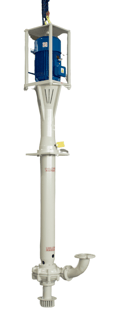
There are a few key vertical options:
- Jolly series – durable, heavy‑duty design with submerged wear parts protected by rubber or Hardalloy.
- MEC series – similar to Jolly but mounted with a strong support frame for easier installation and adjustment.
- AUS series – uniquely capable of run‑dry operation and self‑priming, making it ideal for intermittent flows.
Submersible Slurry Pumps
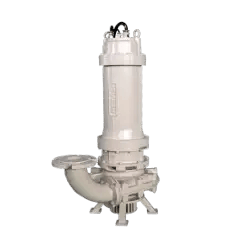
When it’s impractical to install a vertical pump — for example, in deep sumps or wells — PEMO submersible pumps are a great choice. These can be placed right at the bottom of the pit and operate 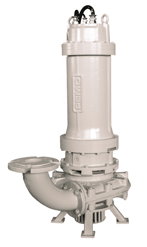 fully submerged. They’re built with Hardalloy wetted parts and can handle slurries up to about 7 % solids (max particle size ~20 mm), while also being easy to install without special structures or foundations.
Submersible models are particularly helpful when you don’t want the cost or disruption of constructing a pump chamber — just lower them in and get going.
Horizontal Slurry Pumps
For many industrial environments — especially process lines and transfer systems — horizontal slurry pumps are the workhorse of choice. PEMO’s horizontal range includes both: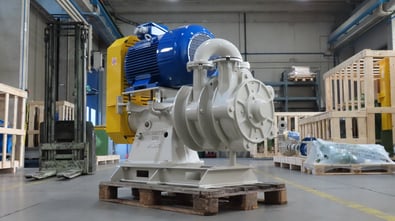
- End‑suction models (AO/TD) with heavy‑duty bearings and robust seals.
- Side‑inlet/top‑discharge models (AO/AB & AO/AB/DC‑TC), designed to improve seal life and handle higher power ratings.
All of these are available with double mechanical seals and external clean‑water flush options — features that significantly reduce wear and extend maintenance intervals.
Slurry pumping is all about matching the pump to the job. When done properly, slurry pumps are incredibly reliable and cost-effective — even in harsh conditions.
If you’re unsure which PEMO slurry pump is right for your application, that’s exactly what we’re here for at Crest Pumps. A short conversation upfront can save a lot of downtime and maintenance later, so get in touch today!